Sex therapy
A few months after sharing a big chunk of my sexual & relationship history on this podcast, I find myself ready to explore sex therapy…again.
Over the past 10 years I’ve sought support as I explore my sexuality, trying to answer the question of what actually is sex & how do I make it work for me? From sex therapy, EMDR & somatic therapies to burlesque dance, energetic work & womb healing, I’ve tried many ways to move the needle in this area of my life.
Most recently, talking openly & honestly about my lived experiences has been the gamechanger. And doing that with a new therapist unearths more pieces of the puzzle for me, even if my brain freaks out a little along the way.
*Heads up* I talk about sex in general (nothing graphic)
In this series:
Ep 14 :: Seeding disenchantment
Ep 16 :: Petroleum engineering smart
Ep 17 :: Sex and the city
Ep 18 :: Part of the job
Ep 19 :: Hawaiian breeze era
Ep 20 :: Time out
Ep 21 :: Risky business
Ep 22 :: That kind of girl
Ep 23 :: Under the influence
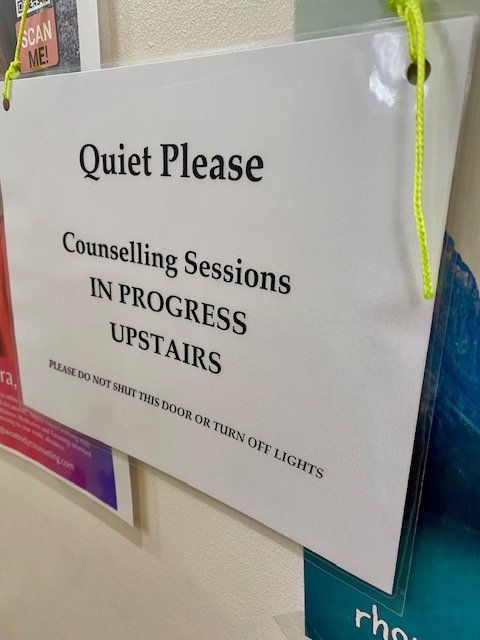
Therapy is in session 📋🤫
Hanging out in the waiting room⏳
Audio Transcript
This is Divine Interruption. I'm Sarah Hildreth Rankin. Hi, welcome back.
So I have detailed quite a bit of my sex and relationship history on this podcast, and I still have more to share. But I think before I go into more of my past, I just need to sit with where I'm at today because it's very relevant.
And before I launch into that next phase of stories, if if and when they want to come, because they might not, I've certainly already thought and felt into a lot of them, and there is more there.
But I also have to be quite true to my process, and that shifts and changes. Sometimes once I've healed something or worked through something, I don't have a desire to talk about it anymore.
So I've been really learning a lot about myself through speaking and through showing up and kind of following these urges that I have.
And really what I'm feeling an urge to talk about right now is really just about where I'm at with sexuality, with exploring what that means to me.
I mean, for the last 10 years, all of my 30s, I was really reckoning with this idea of what is sex to me? How do I approach it? How do I feel about it?
How does it fit into my life today? Trying to figure out how I can move to a level of comfort or just ease or understanding, because it's always felt like there are missing pieces for me. All I can talk to is my own story and how I've felt.
And really for me, I feel like everything just caught up with me at some point. All of the experiences that I had, all the pain, all the shame, all the disgust, all the abuse, all the fear.
I think sometimes we're shown that, well, when you find the right person, then it all just clicks into place and it's magical or it just works out and you just have this amazing fit. And that was not my story.
And I think sometimes when there are missing pieces, they're not necessarily your partners to provide, right? There's something inside of us that is asking to be looked at.
So for me, once I, you know, found someone who was solid and well-rounded and grounded and cared for me, respected me, that's really when my past just woof came slamming back into my world.
And it was just so loud that I couldn't ignore it any longer. Really so loud that everything around me crumbled, and I just couldn't pretend to be any different than I really was anymore.
So that for me has been yeah, 10 years of really working with this concept around sex. And just recently, I've started sex therapy. And this is something I've done before.
I have certainly dabbled and experimented with all sorts of things over the past 10 years in trying to figure out this nebulous feeling I have and this discomfort I have with sex or not wanting to be present, not wanting to be physical.
And trust me, I have some amazing excuses. And I don't want to downplay those because they're all very relevant.
I mean, just seeing what my body has been through, you know, in terms of chronic illness and symptoms, in childbirth, in taking care of kids, in trying to figure out my passions and my purpose and, you know, withmounting distress internally,
emotionally, mentally, physically, like there are so many reasons. And then you add on to there, you know, my history with men, with sexuality. And then you add on your childhood and how were you attuned to what did you witness through your parents?
Like, there is so much there that I think there are amazing reasons as to, of course, it's gonna be a complicated relationship with sex. Of course. Like that is so obvious.
And yet for me, there's still this desire to kind of go there and figure it out. I just like cannot let it go. I'm like, no, I want something better for myself.
I want a different way of being sexually.
So over the past 10 years, I certainly have experimented with different ways of exploring or finding the answers to this question.
Um, I've seen a sex therapist before and other practitioners with the sex therapist, it was very much, you know, let's spend an hour going over all of your sexual history and all of your relationships.
Then the next session we'll jump into new exercises. So that for me was like a very small blip of here, open up about your most vulnerable and terrifying moments and just tell this stranger all this stuff.
And then next time we're gonna pretend like none of that ever happened. And now we're gonna give you a workbook of exercises you can do with your partner, holding hands with a timer on and looking into each other's eyes.
Like there was this very prescribed sequence of events that I was supposed to do. And I just fell off the train.
I think I saw this person for six sessions and so desired to be there and to fix, quote unquote, fix this problem that I was having, where I'm like, I don't want to be sexual.
And I don't know why, even though I have 42 reasons I could think of as to why, but how do I move past this? So that didn't work for me. It felt like we were skipping something.
I was like, so I've shared all this stuff and now we're not referencing it anymore, and we're not going into any more depth. Now we're launching ahead. And something about that just didn't work for me.
I also saw another therapist and she asked me at one point, she's like, Do you think that you're asexual? And again, it's, you know, we're all in a spectrum. So if you're asexual, you're asexual.
That's cool. Like you can be any of the things, right? But for me, that was an answer to the question that just did not resonate at all.
And I kept thinking, I was like, no, I I just I think there's so much more to explore here for me. And that is not the answer that I'm looking for that helps me in any way. And for someone else, it might.
For me, it didn't. So I was seeking people and other ways to just kind of fix and tell me what was wrong. I took a burlesque course at one point, and that was kind of, I think, overriding where I was at the time.
I thought, okay, if I can conquer this fear and be super vulnerable, you know, and learn how to dance in this way in a public setting and be sexual and be sensual, then then that will tap me into, you know, my own sexuality.
It will, it will just change things. And taking that class, it just did none of those things. It actually was quite triggering to me.
I remember thinking, as I was doing it, and I was, I'm like, no, I'm showing up, I'm being brave, I'm doing this thing. I remember thinking, now I'm being told to dance in a certain way. And I don't like that.
Like I didn't feel like it was a fit for me. I felt like it was just this other thing that I was being told to do in a certain way. And that's how I feel about sex in so many contexts, is that I have to be a certain way.
And this is the way to be, and this is how it works. And so I think already existing, even as someone with a female body in the world, you know, there's there's all these ways of being, actually, for all humans, if we really look at it, right?
We're expected to be this certain way, this societal norm of what this is.
And I always wanted to be desired, and I always wanted to be wanted, and I always wanted to look and act a certain way so that I could obtain that type of connection with someone. But none of it was truly authentic. It was all learned behavior.
A lot of it was coming from survival tactics as well, or a way of seeking love and connection that wasn't from a true space. It was like, I need this, therefore I need to act this way and do these things to obtain approval, right?
And that comes from so many things in the past. But kind of seeking and seeking help, I found there were many closed doors that kept happening for me. And I'm someone who really needs to bump up against a lot sometimes to learn.
Like, I do need to experiment for myself. Someone can tell me something. I'm like, cool, cool, cool.
I hear what you're saying, but I need to go over here and I need to experiment and I need to try these things out.
And I will usually know at some point, either right away or through that process, like, okay, this is for me, or this is what I need, and this is what I don't need.
So I bumped up a lot against things that were not working for me, and I could tell why. I was like, this feels yucky. This feels like I'm being told to do this.
Or it's like, oh, you're having problems sexually. Well, you just need to get some toys or experiment with some outfits or have some fantasies. That's been advice I think that many of us are fed from many different areas or that we're shown in media.
It's like, oh, spice things up. And for me, I'm like, we are missing the point for me. Let me again say that like for me.
I always felt like that was sugarcoating something or more likely bypassing something. I'm like, no, no, no. Like that's cool if you already have this deep sense and connection sexually and you're feeling alive, right?
But if you're just telling me to do this thing and dress up, like that is not gonna fix my problem. That to me is just like slapping a band-aid on something. And none of that ever worked.
So a lot of the advice I was getting just wasn't resonating. And I think a lot of the things I experienced too, sometimes I just wasn't ready for it or it wasn't right for me.
And there are parts of my journey where I'm like, okay, I was actually at stage one and I was leaping to stage six, and there was a learning in there that hadn't happened yet.
Like, how can I expect embodiment in, you know, um, kind of sexually laced dance class when I haven't even connected with that part of myself yet. But I always assumed, well, if I do that thing, that will open it up for me.
So I think we all have our own path. And a lot of times I was looking for the fix or the person or the thing to change. And yet I really had to follow my own path.
And that path has taken a very long time and a lot of healing, different areas of my life that feel very, you'd think, oh, that's how's that even connected? But it's all connected, right? Everything is connected.
And that's why we can't really question when we have these urges like today for me to speak about this.
If I ignore that, it is going to slow down my progress in some other area of my life because I'm like, okay, the urge means to do the thing, or that's how it's been for me.
Um, maybe I need to heal this other thing with my work to realize something about myself that then helps me open up to something about my sexuality, right? Like it's it's all connected.
So I did so much more healing throughout this process over these 10 years. You know, I've taken courses, I've read books, I've experimented with so many different ideas and practices. You know, I've screamed in my car, releasing anger.
I've taken courses around embodying like the sensual self, where, you know, I'd like growl, like look at myself in the mirror, where I'd do all these different movements and breathing practices, and um, you gaze into your eyes.
And there were moments in some of these practices where I felt something and I was like, oh, there's a connection there, right? There's maybe even like a seed of, is that my sexuality? Like, is that that feeling, you know?
So I'd done a lot. It's just, I never felt like anything was moving the needle in terms of me wanting to like connect with my partner and be with him in that way. Like there was just still something that was holding me back.
And so I think last year when I was really called to start speaking about these past experiences, that was me giving myself the space to delve into my history and make sense of it and put words to it, which is what in past therapy wasn't happening.
I almost felt like I was being rushed through that process, like, okay, well, now we're gonna fix the problem. And I was like, well, I think I actually need to talk about this, or I need someone to witness it with me.
So, in a way, talking about it made that space and that opened up things for me that was very unexpected.
And I think I talked a bit about that before, you know, I was like, whoa, I'm being hit with memories and things I I wasn't aware were there, or like to the depth that they were there. So that really opened and supported things.
And then yeah, a couple months ago, I was like, okay, I'm ready to try sex therapy again. Hopefully, I'm gonna find someone that I connect with. And I just trusted, you know, I would, I would pick the right person or the right experience.
And so I've been doing that for just over two months now, done probably about six or seven sessions, just once a week. And guess what? Sex therapy isn't actually about sex.
Surprise, surprise. Not for me. It's not just about sex itself.
Just as like I've I've felt, I'm like, oh, it's about connection. It's about being seen, it's about being vulnerable, it's about how are we open to love? It's connected to how we were attuned to as kids.
Like, again, there's this huge amount of energy and experiences that lead us to that moment to talking about sex.
And sex could be something with your sexuality or your sexual experiences could be the symptom of all these other things, or it could be backwards. Like, it just depends.
For me, like sex is opening up something else that's connected to all this stuff.
But anyway, it's just been, it's been like a fascinating experience. And I would say leading up to that first session. So I knew I was like, okay, I'm ready to seek talk therapy.
You know, I've done all these other modalities, I'm still practicing those things.
But I just knew I was like, I think there'll be something about me being witnessed by a professional or someone who can maybe add some understanding to some of the things I experienced. So I knew I wanted to do it.
And then leading up to that first session, I got so overwhelmed with the experiences and needing to make sense of it. I was like, okay, how am I even going to introduce myself? It's so complicated.
Like all these things I've been through and where I'm at. And like I've actually already learned all this stuff. So I don't want to talk about these things.
And I want to talk about this, but like this needs to work. And like, how much do I share? Do I let her guide me through something?
Do I lead the session? Like I felt so much pressure, and the pressure was so real, and it was self-imposed. And it was very much, I just don't want to fail again.
Like, quote unquote, fail. Like, I so badly want to move the needle in this area of my life that this feels dire now. Like I've I've put so much expectation onto all of this.
And that doesn't help anything, right? Like having that level of like, this needs to happen. I need to get through this and come out the other side, like this.
I need to fix this thing. So all this old stuff was coming up. And I didn't know where to start.
And when I got to the session, that was the first thing I said. I was trying to like say, okay, this is who I am, but like I don't know how much to share of my life because I don't know where to start.
Like, how do I let someone else in on my own exploration of self? Do we talk about growing up?
Like, do I talk about my parents' stuff and their relationship, what they modeled to me, you know, how they did or didn't show me love or affection, what type of attachment styles, you know, I evolved into over time.
I wasn't sure if I like brought up all the stuff around my body, like the shame I was born into around being a woman, and that I wasn't attractive or that I needed to change myself to be loved or to be desired.
What about all of the formative relationships that I had, regardless of if they were sexual or not? Like, what about all my family relationships, all my friendships, and then my first crushes? Like, what was my first introduction to sex?
What was that like? And all of this is stuff that happened before I ever even like had a crush on someone.
Then I think about all the like the eight plus hours of episodes of me talking about all of these formative relationships and experiences up until I was 21. And I'm like, well, that's just eight plus hours there. Like, what what do I do here?
How do I fit this into a finite number of sex therapy sessions?
I like wanted to solve it because then of course I've got more experiences that come after this, you know, that have shaped and formed and informed me about sexuality and how I feel about it, including, you know, because of my lived, you know,
spiritual experiences and perspective, then we could just travel through the world of trauma, live through other lifetimes, live through my family lineages and ancestors and all the energy and patterns and beliefs that they've passed along to me.
Like there is this infinite number of reasons that have brought me here, you know, wanting to seek this conversation with this therapist. And it was so much.
Like my brain could not comprehend, it couldn't hold it, it couldn't control it, it wanted to make sense of all of it. And that meant that the first two sessions I had were literally me talking about that. I was like, I don't know where to start.
What do I say? How much do I say? It was so frustrating.
Maybe you've been in this situation before where you know where you want to be and you can't get there. And your brain, like, there's this part of you that's like, just trust, just chill out, like you'll get there. You don't know what's happening.
But then your brain needs to like almost word vomit out all this anxiety and fear and stress. And that's what I did. And it was all about me and how I was gonna approach the therapy.
It was nothing about what actually had happened or anything I'd been through. I was like, how do we approach this? So my brain needed to do that.
I needed to go through that. It was very irritating for me, but I was just like, it was humbling because I'm like, whoa, there's a lot here for me. No wonder I feel stuck.
I've been trying to sort this out for years on my own. So yeah, the first few sessions were just conceptualizing how to approach the therapy.
And then I think on the third session, I finally got into talking about, okay, let's just launch into an experience and start talking about experiences I had with men. So once I did that, I felt something unlock. It was like, okay, we're here.
I can be present with this memory, with this thought form. And yeah, an hour is a very short amount of time. And I just had to then sit with that for a week and wait until the next session.
And then I would like add on to that experience. It was almost like, again, what I've experienced through the podcast, speaking to it opened and then closed something. So that was really healing.
And it was almost like once we talked through something, I was like, cool, I'm good with that now. I think I'm good with that in a new level that I hadn't experienced before. And obviously, talk therapy is a very specific thing.
And I've sought it out at different times in my journey, less so the past like five years. I've been like, no, I'm more on the somatic side, more on the energetic side. But there's something about speaking that felt very important.
I was like, okay, I just need to talk through these things.
And she was able to, yeah, listen, be there, be really present with me. And then she could validate the experiences I had. She could add a professional perspective.
A lot of what she told me were things like, you've actually come up against a lot of darkness, you know, at this level that I'd never really thought about.
She's like, Yeah, you've had some experiences and a lot of people that were actually like not out to do good things. And I think her saying even the word darkness, I was like, Yeah, I've felt that. Like I've carried some of that.
And that there were so many times where she's like, oh, you could have pressed charges against people multiple times, which obviously I didn't have any concept of at the time.
So I think her putting that in perspective as to why, okay, that would be really damaging. And like I know that, but having someone else, even an adult, like just having an adult say that, like that was not okay.
Like science we we know, but when there's no one else there to witness it with you or be there or hold your hand through it, we don't know what to do with it. And that's been so much of I think my experience with living through things.
It's just what almost what's more traumatizing is holding something in. The experience itself can be really scary or damaging, whatever it is, at different levels.
But sometimes, or for me in my story, I look back, I'm like, man, if I could have just talked to someone about that, I don't think I would be sitting here, you know, 20 years later needing to talk to someone about it.
Because I think the trauma came from holding it in and having to hold it myself. I don't think it was necessarily the actions or the experiences themselves. Some of them, yes.
And to some degree, they're all different, but it's the caring alone that's been so traumatizing that has reflected holding and feeling alone with pain the rest of my life, right? It's it's a pattern. So that was really eye-opening.
Also just seeing that, yeah, okay, some of this was, most of this was pretty dark. There's some things that happen along the way where people stumble, they make mistakes, or they show up in a way that they probably regret. Fine, we all do that.
But some of it, she's like, no, this is pathological.
You've run into a lot of people, or they've sought you out, or you've sought them, who knows, who pathologically like could be diagnosed with things that are causing them to act in ways she's like that are very scary and dangerous.
So I needed to hear that too. So once we talked for about three sessions about. Past experiences, I had so much more to say.
And then leading up to one of my sessions, I was like, hmm, I don't feel like talking about that anymore. And something shifted. And I just knew that I'd talked enough.
Like, okay, I've spent three sessions talking about the past, two of those talking about how to do the therapy. But yeah, when I reached session number six, I was like, I think I'm ready to like work on today.
And that's something that I haven't been really prepared for.
I've found that maybe my comfort zone has been in delving into the past, in making sense of what has already happened, in looking at stories with people who don't exist anymore in my life, or who I am not in contact with, or who aren't characters
that I have to interact with. Like it's a safe place for me to be in the past and look at those things. And that's where I've been seeking to make sense of things on my own.
And now I'm like, uh-oh. Now I have to look at like my current relationship, or I have to look at how I am today and like make changes. Like sometimes I just want all the stuff I've been doing to just magically change everything.
But on the journey, we never know where we're going to be guided, right? And we do have to do that work, I think. But there can be times when it's like, now we have to take the action.
And the action might be scarier than doing the work. Like, I don't know.
For me, this was the scariest was being in the present, was looking at where I was today, because then I had to confront all the feelings I had of being a failure, of not having figured this out yet, of like, but what if there's things today that
like I don't know what to do about? Or there's always a fear of what if everything in my life isn't aligned? And then what do I do about that?
And even dealing with a live person, which maybe seems silly, but like when I'm in an actual relationship with someone and interacting with them the day to day, like I can find that quite nebulous and confusing versus when there's a character in the
past, it's like, oh, I can label that or I can see that and I can put it away. But when you're in active relationship, then I'm like, oh no, this is where I have struggled in the past. How do I do this? I know that I can control myself, right?
So that's why I love doing love. At some level, you know, now I've gotten very familiar with doing personal work because I'm like, oof, I can go wherever I want to go because I can control myself. I'm ready for the process, I can show up.
I can't necessarily do that with someone else, right? And that can become very tricky. I can't force my partner to do personal work, whatever that may be.
I'm not saying that's what needs to happen, but it's just been much easier because I'm like, I could control everything I do. So all of that came up the week leading up to this appointment. And then I was like, okay, but I'm ready.
Like I need to push my edge of discomfort. So in that session, I told her that. She's like, okay, well, here's some things you could do.
And she led us to like an actual practice, which I'd done again with therapists in the past, but I was like, nope, this is different. I'm in a different place in my life. I'm ready for this.
Here's my homework. And it was essentially like lying together, like you do use a timer. So you keep it in this short container of like lying together for 10 minutes in a certain way, and holding each other and then touching each other.
And it's not sexual, it's just connection. And it's just about rewiring the brain. It's almost like being present with feelings and what comes up and doing it at such a minute level.
It's like that cannot be threatening, or maybe it is, but it's containing touch. It's containing connection. So we did that.
And I found that when we slowed down to that level, emotions just started coming up for me. Which again, I'm like, of course, this is what always happens to me.
This is why being sexual has been so challenging because I'm flooded with a bunch of feelings and thoughts and sensations. And it's hard to know what to do with that. But in this exercise, I just allowed them to come up, right?
I didn't push them back down. And that was kind of the whole point. It's like, can we be present with what's coming up right now and not worry that this has to progress into anything else?
Not worrying that I have to be different, look different, act different. I don't need to perform anything because I'm just going to be held for 10 minutes, and that's all this is.
And yeah, so I felt a bunch and I felt this deep connection just to feeling love. I was like, oh, what does it feel like to just be held in tenderness, not with sexual expectation? And like for me to be very present with that.
I felt very vulnerable doing it. Um, and it was such a small thing, but it did move something. So I was like, okay, next session, we kind of progress on that.
Try this again, but shift a few different things. Now there were moments where I was feeling I was like, okay, I kind of already know what this is, like, hmm, but it's not having an expectation. It's just kind of, can I be here?
Can I be present with my partner? And can he be present with me? And that's kind of it.
It's very meditative. So then after doing that for a couple of weeks, she's like, okay, well, typically now we'd move on to this step. This is typically what sex therapists are given.
It's tried and true. Like it moves people from one stage to the next of like being able to be fully like sexually aroused and like have a connection with their partner or to orgasm, whatever it is. And I was like, hmm.
As she was talking about it, I was like, I don't know. This feels really clinical. This feels very focused on like reaching a certain preordained point.
You know what? I'm not concerned about my body. I'm not concerned that it doesn't work.
Like it, it just felt like I'm like, that's not the thing. Do you know what I mean? You know, I reached that point with so many other therapies and with different people where I'm like, that's not the thing.
And as she was giving me this and telling me this program, I was like, that's not the thing. And so this time I listened to my knowing and I told her that.
I was like, something about this doesn't quite feel like what I want to do. And I don't think it's because I'm afraid of doing it. It's because it doesn't quite feel right.
I just found myself talking. I was saying these words, and I was like, you know what? I want to entirely rewrite the script on what sex is, to me, anyway, because it feels like something's missing in this.
And like I've I've wanted to rewrite it for so long. There's something about even this experience of us working through these progressed steps that don't feel right anymore.
Like, I don't want to keep going in that direction because I don't know, it's not just sex, like it's life. And like, forgive me if this makes any sense or not. But like to me, I just want to be like turned on by life.
I want to be excited about doing these steps. I want to feel alive. I want to feel full.
I want to feel whole. And that was missing. So then she actually got kind of excited.
She's like, oh, okay. She's like, you're ready for like a different path. And I was like, yes, yes, I am.
And I think when I've looked back and connected, like, what even is sex to me? What is sexuality? It's a feeling of like being fully alive.
Like if you could go back and remember the first time you felt those things. And again, for some people, those might be actually very painful memories, right? Or like things that happened that weren't okay or were premature, whatever they were.
It's different for all of us. We all kind of have a different narrative that gets us there.
But for me, I just remember even being like a teenager and just feeling turned on by life, like just having sexual energy, but it wasn't about necessarily performing that with a person in a certain way.
It was like, I'm kind of excited to see what's going to happen tonight when I go out with all of my friends. And ooh, like I wanna, I wanna create things, I want to make things, I want to dance to music. I don't know.
It's just for me, sexual energy is like this feeling of being fully like in love with life and feeling alive. And so I'm like, how do I capture that? And how do I take that and put it in a container with another person?
Because for the longest time, I believed through a lot of my experiences that this feeling of like the feeling I just described, this aliveness, this excitement, this was attached to a new person.
Like for me, it was that's when I need a new person, because that new person is new. That's novel. That brings up those feelings of adventure and like sometimes it's kind of risky and unknown, and it makes me feel alive.
So I was always attributing that to another person. And so when things maybe weren't working out in a relationship, or for whatever reason, there was this thing of, okay, now it's the next person. I need to find the next person to feel alive with.
And also, like, not surprisingly, like, guess what? When I was with a new person, that person didn't know me, right? So I could kind of be whoever I wanted to be, or I could let them think I was whoever they wanted me to be.
So I was less vulnerable.
You know, when you're in a long-term committed partnership with someone, whew, you're gonna be vulnerable, you're gonna be seen through all of these moments, you're gonna show up for each other, they're gonna get to know you as a full person, a whole
person behind all of whatever you're hiding behind in the beginning. So that was very scary for me. So I was also attaching that, like, oh, well, they're gonna, they'll like me in the beginning.
They're gonna think I'm a certain way, I'm exciting and fun, because underneath that I'm not. And so I need a new person. And that was just always kind of imprinted.
I had all these associations, right? And when I was telling her, I just wanna, I don't know. Like, what if I could just be who I fully am with someone?
And as I started saying that, I was like, whoa, what does that mean? I'm like, like, what if, I don't know, when we were doing those first exercises, like I was crying and I was just allowed to cry? It's like, okay.
And I'm like, that was special. And then I was like, well, what if when I was angry at my partner or like when I was having a bad day, I could connect with them and be sexual? What if I could be grieving something and be sexual?
What if I could be irritated and I could be sexual? Like, what if I could just fully express all that there is in me in that space with another person? And that could be a part of the sexuality.
That could be a part of the sexual experience. I don't know, that kind of like blew my mind. I think I've touched that before in moments, that knowing or that understanding, that connection between fully being seen in exactly the space that I am.
And like that, what if we brought that to sex? Because for me, sex has felt like that's where I'm like, but I have to be different. I have to be excited about this.
I have to be turned on, I have to look and feel a certain way to be able to even do that, to open up to someone. Like I had all these rules in my head of what was expected of me for good reason, right?
Like because of all the training that we learn and the experiences we have, and then these beliefs get imprinted. And also, like, I have to have the energy, I have to have the desire. What if all of that's not there?
Then I have to force myself to pretend those things. So, you know, for years I've just been like holding off. I'm like, I'm not ready for this.
I'm not ready. And like now I'm seeing, I'm like, okay, I can't just hold off any longer. There's there's something here that I'm meant to explore, and it's scary, but it's different.
And this was the first time I kind of connected that. I'm like, well, what if being sexual could just be fully being as I am? Instead of shutting down the crying or feeling embarrassed about it or stopping.
What if I could just keep crying? And then I was like, oh, that makes me feel alive. That makes me feel like myself, right?
Because myself is like this big, messy blob of like all sorts of feelings and things like to be a human, right? So instead, she gave me like a different exercise.
We kind of talked about this, a way of kind of opening up to each other, like breathing and all that. So the point was to kind of just be vulnerable again in a different way and not achieve anything. Um, and again, have like a timer.
So it's like, okay, this is a contained experiment. And that entire week, I procrastinated this. Like I told Nick what the homework was, and he's like, oh, cool.
But I was like, but I there's like resistance to it. I'm like, but I don't, like, I want to do this, but I don't, but like I have to. And because I feel like I'm supposed to be a certain way, or like, what if I do that and I don't feel anything?
You know, there's all these fears. Of course, the night before, Nick actually falls asleep. And then I'm like, no, no, no.
I'm like waking up. We have to do the homework, we have to do the homework. I have to go to my person tomorrow and tell her we did this thing.
So thank God, like there is some accountability because sometimes you do need that. You do need someone to push you or like hold you accountable. Otherwise, maybe you're not going to get through your resistance.
So I'm really glad I did because that experiment, I did connect with that feeling again. And this time it was like through my body, that feeling of being alive. And like, how do I put it?
I felt like as we were breathing and like holding each other, it's like I was allowed to slow down to such a level. And then I was just focusing on my breathing. None of this.
There's no pressure to be or think or look a certain way. I'm not worried about having to have sex in any way. I'm not worried about having to perform anything.
I'm just with this person. I know it's going to end in 10 minutes, so I don't need to sustain a level of energy, whatever it is. And I didn't feel sexual.
That's not what happened, but I felt so connected and I felt my heart. We slowed down to a point where like I was just there. And then I started to feel my heart opening.
I felt his heart opening. And then I started seeing things. I was like, oh my gosh, I'm seeing this like epic forest in this fairy tale land.
And then I'm like, and there's dragons there. And this is what I told him after. I was like, oh yeah, for me, I'm like, that's what's true, because that's kind of my world, right?
Like I exist in two worlds and spiritually I see and feel things at that level where I am seeing other existences and I'm seeing other lifetimes or uh things that are just beneath the surface, right? I'm like, that's who I am.
So that's something I have not been bringing to another person in this very vulnerable way, especially in a sexual experience. But what if I could be that? Like that opened up something for me.
Cause I'm like, if I can start seeing shit and like being in another fantasy land while I'm with someone and connect through their body, I'm like, oh, that is so exciting.
And I could see how like a sexual feeling can be sparked through that for me, because it's opening up this deep connection and it's true and it's authentic to me. I'm not shutting it down, I'm not not talking about it.
And we're going so slow and being so present that that's what allows me to be in that space. So now I've connected with the feeling of like what sex can be, something that's super true. And it just feels like I don't know, it feels alive.
It feels true. And it's really was, yeah, essentially about slowing down to be so present and so still that it allowed me, like this.
I I felt like this shy little kid version of me kind of peeking out and opening up and being like, oh, like can I be here? Can I start to calm down? Can I start to feel safe?
Like that's what's been missing is like this feeling of safety to even be who I am, right?
And I keep thinking when we're frustrated with each other, as you know, when you're together with someone for a long time, you're going to encounter so many different scenarios and feelings. And sometimes that will, I will put the focus on that.
Well, I don't want to connect because of this. Or even months ago, when I was talking about my podcast, I went through a period where I'm like, men, like, ugh, like I got my hackles up. I need to say these things about men, and I don't trust them.
And I know it's not you, but I can't connect with you right now because I've got these deep-seated feelings. And it was about that. And yes, all of those things are valid.
But what I realized was that it's not that my partner can't be present with me.
Like maybe in the day-to-day of life, we're doing things and I would like to have some more deep conversations, whereas he's just like, cool, I want to go do this other thing.
But at a base level, like he has been waiting for me, and he shows up with a level of like physical presence that I do not have because getting that close to someone is terrifying for me.
And I have not actually been able to hold that presence for him, with him. The therapist was talking about like looking into each other's eyes. And I'm like, that makes me want to cry.
I don't think I can do that. That is so vulnerable. That is so real.
And I'm not sure I can hold that level of presence. But what I realize is that my partner can. He's actually the one who is showing up for me.
He's available, he's vulnerable in that very grounded way. Whereas for me, I just wasn't able to hold any of that.
The love that he's trying to show me through his sexuality or through his physical presence is something that I am unfamiliar with, that I am uncomfortable with. So I've actually been pushing a lot of that away.
But when I can feel really safe, so like if I first seek this safety, and then from that safety, I am able to slow down, and then I'm actually able to be in the moment. I'm not like rushing through my head to all these other things.
And then from that presence, I'm like actually in connection with myself. Like I can then, okay, I feel this part of my body. I'm seeing this color.
I'm like fully there. I'm safe. I'm present.
Like from there, then I can start to like open up and I can feel curious and I can feel excited and I can feel more playful.
But it took like this level of slowing down, this level of safety to kind of help me realize: whoa, also, this is not just about sex again. This is not just sex. This is about being alive.
And this is, of course, happening in every other area of my life.
That's where I'm at today is like opening up to can I feel safe enough to be present with who I am and allow all of myself to be here?
And sex is just another area of life, if not representative of all life, this place where you can be alive and be fully seen and connect and play, whatever it is.
But of course, it hasn't felt real or authentic because I was never even bringing myself to the table. I was never fully allowing all of myself to show up.
And that's in other relationships, that's in family dynamics, that's in work situations, that's even with my kids, right? I'm trying to find these spaces where I can fully be like, it's okay. Yes, you are traumatized by life in general.
You're a very sensitive person. And for all of the reasons and all of the things that you've experienced have shut you down again and again. But now it's time to get so present that you can start to open up and feel that.
So, wow, just like I don't know. It's just been quite remarkable and helpful. And it's like the unlock that I was ready for and that I kind of saw coming.
Like I keep knowing, I'm like, okay, I'm gonna head in this direction. I think maybe this thing might happen. But now there's less expectation on what and how that I'm gonna get there.
And now I feel like after seeing this person for like seven sessions, I'm like, okay, I think maybe one or two more over a longer period of time to check in because now I kind of have the blueprint or the vision for where this could go.
And now I realize I'm like, sex can be anything. If I can just like hold my partner for half an hour and have all these experiences and feel and like be together, I'm like, to me, that's that's pretty sweet.
Like we could expand on that for years to come and build that out. And it could look any which way because now that I'm present and I'm open, I can see how I could want to be there. Do you know what I mean?
I'm still building that muscle of like, okay, I need to practice a little to like keep showing up. Whereas I've been used to holding off and being like, no, no, no, I don't feel like this. I'm too tired, nothing's perfect.
I can't show up. Now it's like, I don't need to be perfect to show up. I don't even need to be happy to show up.
I don't need to feel sexual to show up. I don't need my partner to be a different way to show up. Like we can just do this thing together and see what happens.
So now that I know that that's like the framework for what feels exciting to me and what can lead to other things, I'm like, okay, like that's the unlock. I just was never able to fully bring myself or experience that.
So groundbreaking, sex therapy isn't about sex, but sex is about life and life is about sex and all of it. So I just wanted to share that because it's kind of in real time what I've been doing.
And essentially, yeah, I've I've wanted to share more about past experiences, but a part of me is like, oh, maybe I'm like closing this chapter for myself and I don't need to talk about other relationships anymore. I'm not sure.
We'll see, we'll see where this goes. But yeah, I just want us to be able to rewrite some of this stuff for ourselves.
The therapist was saying, because I said, you know, I've talked about this with other people, and I've asked questions sometimes of other relationships and kind of been seeking other forms of information or like. I felt weird for a while.
I'm like, am I the only one that just feels like something's missing? Like this is like not, it's not that my person isn't awesome. It's not that I can't, like my body is ruined or like I can't feel things or I can't climax or anything.
But I'm like, it's not about that. You know, I just always felt like there was more. And I'm not sure if we're talking about that enough.
And maybe I've just been in the wrong circles and I've been kept aside from all these conversations because I've meant to meant to find this on my own for me.
But I would just be so curious to hear other people's experiences, especially because of how we have been trained and what we've learned.
I think, I don't know, I could be wrong, but I think a lot of us are doing things and we know there's more, but we don't know how to get there, or we don't know what how to define something for ourselves.
And again, if there's two people, both people kind of have to be on board. Again, I'm working with someone who doesn't see the world through my lens, who isn't having the same visions. Like, just like I'm not in my partner's body.
And so I'm like, what is this presence you have, this physicalness, this groundedness? Like, what does it feel like to feel safe in your body? Like he has that and I don't.
So I was like, well, I can never be like that. But now I'm realizing I don't need to. Because when you come together, it's like I can be the other person.
I can be the person who's visioning, but I'm rooted in safety and grounded with this person, and I can help open him up to other ways of thinking or perspective, if that makes sense. Like work together. I don't need to be different.
I actually just need to be who I am. And that is something I have not been allowed to be, or not even allowed myself to be, you could say. Anyway, I think there's more conversations to be had about this, but I will keep you updated.
So thank you for listening. And yeah, we'll talk again soon. Bye.
